
When considering refinancing a Coquitlam home to pay off debt, replacing your existing mortgage with a larger loan allows you to clear higher-interest balances using accumulated equity. If the new mortgage is larger than the balance you owe, the extra money can be used to pay other debts. The lender does not look at the old payment and stop there. The lender counts the new payment, and the lender looks at the debts you say you will pay off. The Coquitlam page is the city page. The refinance page, the refinancing guide, and the cash-out note cover the same idea. The debt page is the one to read if a bank mortgage is not available and a B lender is the path.
This works only when two things are true at the same time. The home value has to support the new amount, and you have to be able to carry the new payment. A lower credit-card payment does not help you if the new mortgage payment rises by more than the cards cost you. Write the numbers down before you apply. Guessing that it will "feel cheaper" is how people end up with a bigger mortgage and the same cards still open.
What the lender actually counts
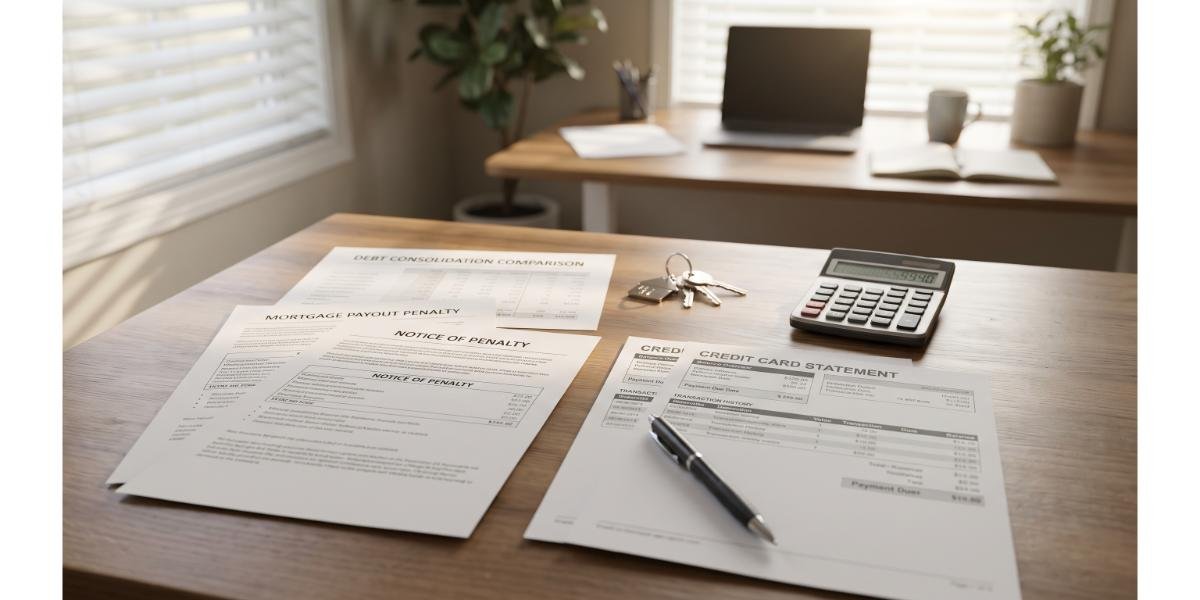
Start with the current mortgage balance, from a statement, not from memory. Add the penalty if you are breaking the term early. The penalty is part of the cost of leaving. Some lenders will add that penalty to the new mortgage. Some want it paid from the equity. Either way it reduces what is left to put on the cards.
Then list every other debt: the balance, the payment, and the interest rate if you know it. Include the car, the line of credit, the cards, and any tax you owe. A debt you leave out will still show on the credit report. If you say you will pay a card off and you do not, the lender can refuse to fund, or the payment comes back into the file at the end.
The home value is the other half. The lender may use an appraisal. You do not get to pick the value. If the appraisal comes in lower than the price you have in your head, the amount you can take out drops. Do not promise creditors a payout until that number is back.
When the term is not finished
If you are in the middle of a term, ask the current lender for the penalty in writing before you apply anywhere else. A penalty that is larger than a year of card interest can wipe out the reason for the refinance. Read the renewal page if you are close to the end of the term. Waiting a few months until renewal can remove the penalty. It can also leave you paying the cards for those months. Compare the two on paper.
A blend with the current lender is something some banks offer. It is not offered by every lender, and it is not always cheaper than leaving. Ask for it in writing and put it next to a full refinance. Do not assume the current bank will match another lender.
If a bank will not do it
A bank says no for a reason. Credit, income that is hard to document, or a value that does not support the amount are the usual ones. A B lender can still do some of those files. The rate is higher than a bank rate. That higher rate is a cost, and it should be in the same worksheet as the debts you want to pay off. A higher mortgage rate that clears a 20 percent card can still make sense. A higher mortgage rate that clears a cheap car loan often does not.
The debt page is where that B-lender path is described. Bring the bank's decline if you have it. Bring the statements. Do not open new credit while the file is in process. A new phone plan or a new card changes the payments the lender just approved.
Current mortgage statement and the payout penalty, in writing.
Statements for every debt you want to clear, with balances and payments.
Income documents. A job letter and pay stubs, or two years of returns if you are self-employed.
Property tax notice and, if the home is a strata, the strata fee.
The list of what you will do with the extra money. "Pay debt" is not enough. Name the accounts.
After the new mortgage funds
The payouts should happen at the notary, not from a cheque you take home and promise to apply to the cards. If the money hits your account, the cards are still open and the new mortgage is already in place. Ask the notary which debts are being paid from the proceeds. Keep the zero-balance letters.
You can test a payment on the mortgage calculator. That test is not a quote. Chad Watts is a mortgage broker with TMG The Mortgage Group. One application goes to more than 50 lenders. You do not pay the broker fee. The lender does. His BCFSA licence number is 142612. If you are exploring refinancing a Coquitlam home to pay off debt, use the contact page or application to send your statements and get started. The about page and the questions page are there if you want the background first.
Build the worksheet before you apply
Make two columns on one page. The left column is what you pay now: the mortgage payment, each card, the car, the line of credit, and any tax instalment. The right column is the new mortgage payment plus any debt you are not paying off. If the right column is higher, the refinance did not reduce your monthly cost. It only moved the debt. That can still be what you want if a card is about to drive the payment up, but you should see it before you sign.
Add the penalty and the notary into the amount you need, not as an afterthought. If those costs are rolled into the mortgage, the balance is higher and so is the payment. If you pay them in cash, your savings drop. Either path belongs on the page. Then look at the appraisal risk. If you need the home to be worth a number it may not appraise at, have a second version of the worksheet at a lower value so you know which debts would be left unpaid.
Once you pick the debts, stop using those cards. A payoff that is calculated on a March statement is wrong if you spend on the card in April. The notary pays the balance on closing day, and a higher balance can push the mortgage past the amount the lender approved.
Questions on a Coquitlam refinance
Will this lower my monthly bills?
Only if the new mortgage payment, including the penalty you rolled in, is lower than the mortgage plus the debts you actually pay off. Write both columns. If the new payment is higher, the refinance did not cut your bills.
Can I keep one card open?
You can, if the lender approved the file with that payment still in it. If the approval says the card must be closed, leaving it open can stop the funding.
Should I wait for renewal?
Ask for the penalty first. If the penalty is small and the cards are expensive, waiting costs you the card interest. If the penalty is large, waiting can be the cheaper path. There is no single answer without that number.
Who pays the broker fee?
The lender pays it. You pay the penalty, the notary, and an appraisal if one is ordered.
