
Your 2026 Homeownership Roadmap: Smart Strategies for Buying, Refinancing, and Building Wealth

If you live in Vancouver or the Lower Mainland, you know that real estate isn't just a topic of conversation—it’s a lifestyle, an investment, and occasionally, a source of stress. As we look ahead, navigating the market requires more than just browsing listings; it requires a strategic financial plan. Whether you are looking to buy your first home, leverage the equity in your current property, or secure your retirement, having a roadmap is essential.
As a native Vancouverite and a mortgage broker with over 15 years of experience, I’ve seen the market shift, dip, and soar. The strategies that worked five years ago may not apply today. That is why I have developed this 2026 Homeownership Roadmap. This guide is designed to help you navigate the specific lending landscape of British Columbia, utilizing the specialized loan products and strategies available at Watts Mortgages.
Phase 1: The Strategic Buyer – Mastering Home-Rental Purchases
In a high-cost market like Vancouver, the traditional "white picket fence" dream often needs a modern adjustment. One of the most effective ways to enter the market or upgrade your home in 2026 is through Home-Rental Purchases.
Many of my clients are surprised to learn that buying a home with a rental suite (or a duplex) isn't just for seasoned investors. It is a powerful tool for first-time buyers and families looking to upsize.
How Rental Income Boosts Your Buying Power
When you purchase a home that has a legal suite or a secondary unit, lenders allow us to use a portion of that potential rental income to help you qualify for the mortgage. This effectively increases your borrowing power, allowing you to look at properties that might have otherwise been out of your price range.
Here is how we approach this at Watts Mortgages:
Primary Residence with Income: You live in the main unit and rent out the basement or laneway house. This is often eligible for competitive rates and lower down payments (as low as 5% on the first $500k for owner-occupied properties).
Market Analysis: I help you estimate realistic rental revenue based on neighborhoods like East Vancouver, North Vancouver, or Surrey, ensuring the numbers work for the lender and your budget.
Offsetting Costs: In many cases, the rental income covers a significant portion of the mortgage interest or property taxes, accelerating your wealth building.
If you are planning to buy in 2026, start looking at "mortgage helper" properties now. Learn more about how we structure these deals on my Home-Rental Purchases page.
Phase 2: The Equity Optimizer – Refinancing and Renewals
If you already own a home in Vancouver, you are likely sitting on a significant amount of equity. However, equity on paper doesn't pay the bills or fund renovations. With interest rates fluctuating, 2026 will be a critical year for mortgage management.
Don't Just Renew—Optimize
Many homeowners simply sign the renewal letter their bank sends them. This is often a mistake that costs thousands of dollars. Banks rarely offer their best rates to existing customers without negotiation. As your broker, I access over 50 lenders to ensure your renewal terms are competitive.
Refinancing to Consolidate and Build
Refinancing is about restructuring your mortgage to fit your current life goals. Here are common scenarios where refinancing makes sense for my clients:
Debt Consolidation: High-interest credit card debt or lines of credit can be rolled into your mortgage at a much lower rate, significantly reducing your total monthly payments.
Renovations: Use your equity to fund a renovation that increases your property value—whether it’s adding that rental suite mentioned above or updating a kitchen.
Investment: Pulling equity out to use as a down payment on a second investment property or vacation home.
Before you sign your next term, let’s run the numbers. Visit my Refinances & Renewals page to see how we can put money back in your pocket.
Phase 3: The Wealth Preserver – Reverse Mortgages for Seniors
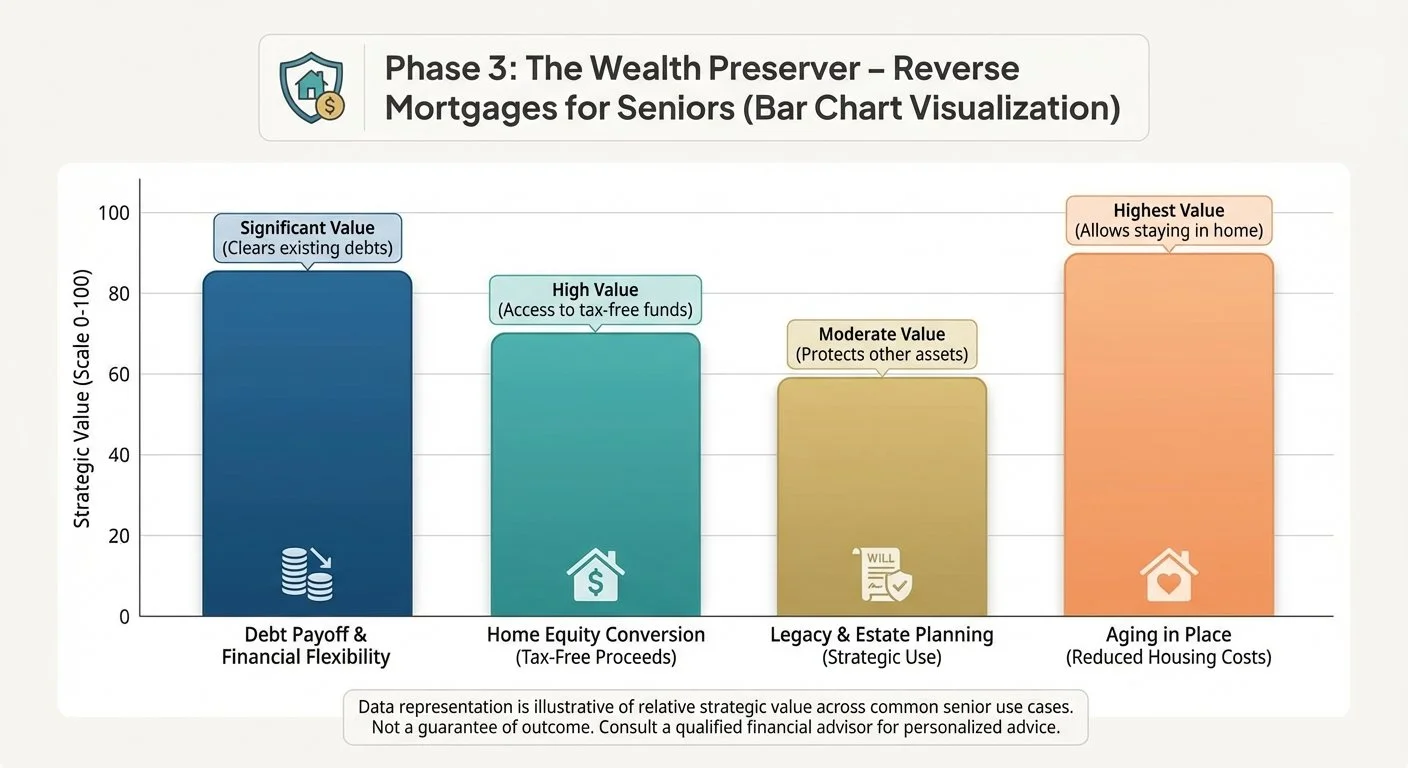
A Reverse Mortgage is a specialized financial tool that allows you to convert up to 55% of your home’s value into tax-free cash without having to sell or move.
Myths vs. Reality
There are many misconceptions about reverse mortgages. Here is the reality of the modern products I offer:
You Maintain Ownership: You remain on the title. The bank does not take your home.
No Monthly Payments: You are not required to make regular mortgage payments. Interest accrues, and the loan is repaid when you move or sell.
No Negative Equity Guarantee: You will never owe more than the fair market value of your home at the time it is sold, protecting your estate.
This solution is perfect for topping up retirement income, helping grandchildren with a down payment (an early inheritance), or funding healthcare needs. Read more about how this works on my Reverse Mortgages page.
Phase 4: The Problem Solver – Private Lending & Self-Employed Solutions
Not every borrower fits into the strict "box" defined by major banks. If you are self-employed, have bruised credit, or are looking to flip a property quickly, traditional financing might say "no." That is where Private Lending comes in.
Private mortgages are typically short-term solutions (6 to 18 months) designed to bridge a gap. They focus more on the property equity than the borrower's income documentation.
When to Use a Private Lender
Self-Employed Borrowers: If your tax returns don't reflect your true cash flow, private lenders offer a way to secure property while we work on transitioning you to a traditional lender later.
Quick Closings: When you spot a deal and need funds faster than a bank can process them.
Bridge Financing: Buying a new home before your current one sells.
As your broker, I have connections to trusted private lenders and Mortgage Investment Corporations (MICs) across BC. I ensure you have a clear "exit strategy" to move back to a lower-rate mortgage as soon as possible. Explore these options on my Private Lending page.
Comparison: Which Strategy Fits Your 2026 Goals?
| Borrower Profile | Primary Goal | Recommended Strategy | Key Benefit |
|---|---|---|---|
| First-Time Buyer | Enter the market affordably | Home-Rental Purchase | Rental income helps qualification; tenants pay down mortgage. |
| Current Homeowner | Lower payments or access cash | Refinance / Renewal | Consolidate high-interest debt into one lower payment. |
| Retiree (55+) | Cash flow without selling | Reverse Mortgage | Tax-free cash, stay in your home, no monthly payments. |
| Entrepreneur / Investor | Flexible, fast financing | Private Lending | Bypasses strict income stress tests; speed of funding. |
Why Work With a Vancouver Mortgage Broker?
You might be wondering, "Why not just go to my bank?"
When you walk into a bank, they can only offer you their specific products. If their rules don't fit your situation, or their rates aren't competitive, you are out of luck. As an independent broker with TMG The Mortgage Group, I work for you, not the lender.
I have access to over 50 lenders, including major banks, credit unions, and trust companies. This allows me to shop the market on your behalf. Best of all, for standard residential mortgages, my services are free to you—the lender pays my fee.
Frequently Asked Questions (FAQs)
1. How early should I start planning for my mortgage renewal in 2026?
Ideally, we should start chatting 4 to 6 months before your renewal date. This gives us time to lock in a rate hold (protecting you if rates rise) and review your credit to ensure you qualify for the best possible offers from other lenders.
2. Can I really buy a home in Vancouver with less than 20% down?
Yes! For owner-occupied homes with a purchase price under $1 million, you can buy with less than 20% down (5% on the first $500k, 10% on the remainder up to $1M). If the purchase price is over $1 million, 20% is the minimum requirement. However, using rental income from the property can help you qualify for the higher mortgage amount needed.
3. Is a reverse mortgage safe for my heirs?
Yes. In Canada, reverse mortgages come with a "No Negative Equity Guarantee." This means that as long as you meet your mortgage obligations, the amount you owe on the due date will not exceed the fair market value of the home. Your heirs will not be personally liable for any shortfall.
4. What is the difference between a private mortgage and a bank mortgage?
A bank mortgage typically has lower interest rates but requires strict income verification (T4s, NOAs) and high credit scores. A private mortgage has higher rates and fees but offers much more flexibility regarding income and credit. Private mortgages are usually short-term solutions (1-2 years) used to bridge a gap.
5. Does checking my options with a broker hurt my credit score?
No. One of the biggest advantages of using a broker is that I pull your credit bureau once. I can then use that single report to shop your application to multiple lenders. If you went to 5 different banks on your own, you would have 5 different credit hits, which could damage your score.
Let’s Build Your Roadmap Together
Whether 2026 involves buying your first duplex, refinancing to clear debt, or unlocking tax-free retirement cash, you need a strategy tailored to the Vancouver market.
Don't navigate this complex landscape alone. As your local expert, I am here to provide unbiased advice and find the solution that fits your life.
Ready to get started?
Apply Now for a pre-approval or Schedule a Free Consultation with Chad Watts today. Let's make your homeownership goals a reality.
Compliance & Disclaimer: Chad Watts is a Mortgage Broker with TMG The Mortgage Group. All mortgage applications are subject to lender approval. Rates and terms are subject to change without notice. The information provided in this blog post is for educational purposes and should not be considered financial advice. Please consult with a professional regarding your specific financial situation.
Contact:
Chad Watts
1350 Broughton St Suite #802, Vancouver, BC V6G 2X3
Phone: 778-773-6631
